Ceramic Beads B120 for sandblasting cobalt-chromium alloy
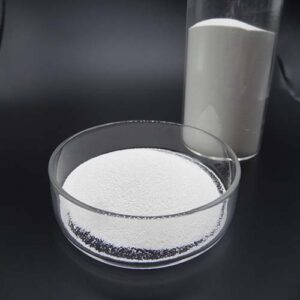
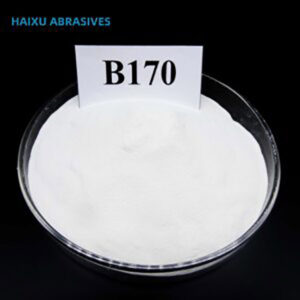
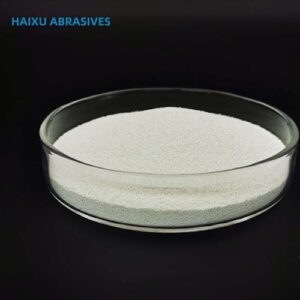
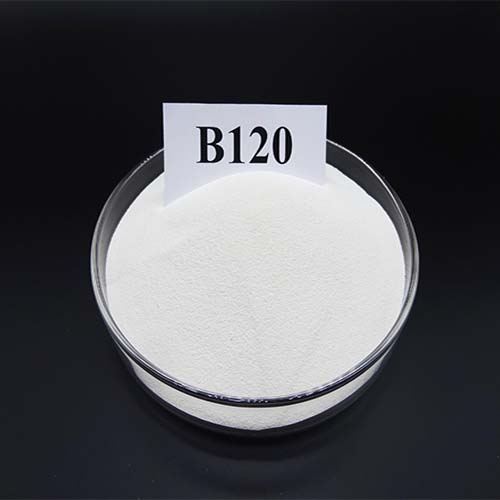
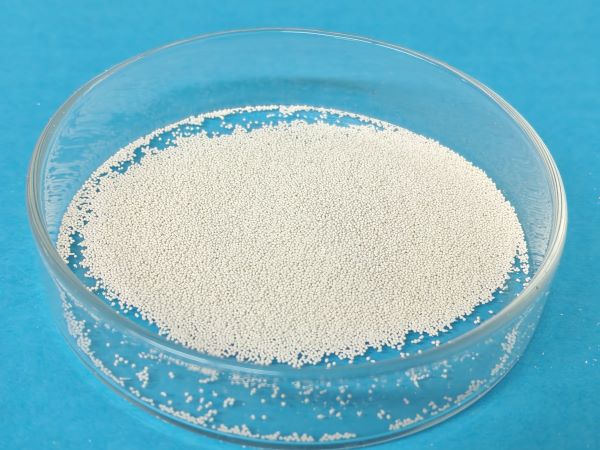
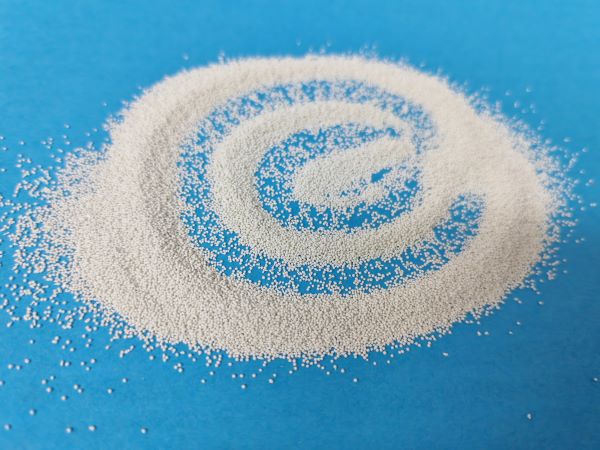
Ceramic beads B120 is a high-performance blasting medium specifically engineered for the surface treatment of cobalt-chromium (Co-Cr) alloys. With its precisely controlled particle size distribution and superior material properties, this product has become an industry standard for applications requiring consistent surface profiling, enhanced coating adhesion, and contamination-free finishing.
PHYSICAL PROPERTIES-Ceramic Beads B120 for sandblasting cobalt-chromium alloy
| Specific Weight | 4.30g/cm3 |
| Mohs Hardness | 7.0 |
| Vickers/Rockwell hardness | 700HV/60HRC |
| Bulk density | 125um and above: 2.30g/cm3, 125um and below: 2.1-2.2g/cm3 |
TYPICAL CHEMICAL ANALISIS [%]-Ceramic Beads B120 for sandblasting cobalt-chromium alloy
| Component | Typical value (%) | Conventional value (%) |
| ZrO2 | 63.80 | 60-70 |
| SiO2 | 26.82 | 28-33 |
| AL2O3 | 9.08 | Max 10 |
| Fe2O3 | 0.03 | Max 0.1 |
| TiO2 | 0.24 | Max 0.4% |
1. Optimized Particle Size for Precision Blasting
Ceramic Sand B120 features a particle size range of 63–125 µm, classifying it as a fine-grade blasting abrasive. This narrow size distribution ensures uniform impact energy across the entire workpiece surface, preventing over-etching or uneven roughness. For cobalt-chromium alloy components, which are commonly used in dental prosthetics, medical implants, and aerospace parts, this level of precision is critical to maintaining dimensional tolerances while achieving the desired surface topography.
2. High-Purity Zirconia-Based Composition
Manufactured from high-purity zirconium dioxide (ZrO₂) and zirconium silicate, Ceramic Sand B120 exhibits exceptional hardness (approximately 700–800 HV) and toughness. Unlike conventional abrasives such as alumina or silica sand, zirconia-based ceramic beads are chemically inert toward cobalt-chromium alloys. This eliminates the risk of surface contamination or embedment of foreign elements, which is particularly important for biocompatible medical and dental devices where surface purity directly affects performance and safety.
3. Spherical Morphology for Superior Surface Quality
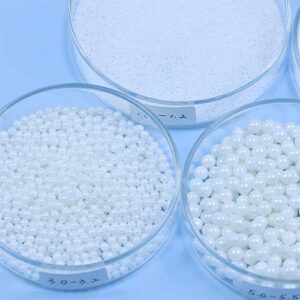
The beads are strictly spherical, with a roundness exceeding 90%. This spherical shape provides several advantages over angular abrasives:
Gentle yet effective cutting: Spherical media peen the surface rather than gouging it, creating a fine, evenly distributed dimpled texture.
Reduced surface damage: No sharp edges or fractures are introduced, preserving the fatigue resistance of the Co-Cr substrate.
Lower workpiece roughness (Ra) after blasting: The resulting surface is clean and uniformly matte, ideal for subsequent bonding or coating processes.
4. Increased Bond Strength for Co-Cr Alloys
For cobalt-chromium alloys intended for porcelain-fused-to-metal (PFM) dental restorations or industrial coating applications, surface roughness directly influences mechanical interlocking. Ceramic Sand B120 produces an optimal roughness profile (Ra 0.8–1.5 µm typical) that significantly improves the shear bond strength between the metal substrate and ceramic or resin layers. Many technical studies have confirmed that zirconia-based fine blasting media outperform alumina or glass beads in achieving higher and more reproducible bond strengths on Co-Cr alloys.
5. Long Service Life and Clean Operation
Due to its high fracture toughness, Ceramic Sand B120 resists breakage during repeated impacts. In a recycling blasting system, it can be reused many times before significant size reduction occurs, reducing media consumption and operating costs per part. Additionally, the beads generate very low dust compared to crushed abrasives, improving operator visibility, reducing equipment wear, and minimizing health risks associated with airborne particulate.
Model Specifications
| Model | Particle size range |
| B20 | 600-850 um |
| B30 | 425-600 um |
| B40 | 250-425 um |
| B60 | 125-250 um |
| B80 | 180-250 um |
| B100 | 125-180 um |
| B120 | 63-125 um |
| B125 | 0-125 um |
| B170 | 45-90 um |
| B205 | 0-63 um |
| B400 | 30-63 um |
| B500 | 10-30 um |