Why Ceramic Beads is especially Suitable for Metal Surface Finish?
In the precise world of metal manufacturing and restoration, achieving the desired surface finish—whether for deburring, cleaning, peening, or polishing—is paramount. Among the myriad of media available, ceramic beads have emerged as a uniquely superior choice for treating metal surfaces. Their suitability stems from a combination of physical properties, chemical stability, and versatile performance that other media often lack.
First and foremost, ceramic beads excel due to their exceptional durability and wear resistance. Composed typically of high-purity zirconia or alumina, these beads are sintered at extreme temperatures, resulting in a microstructure that is incredibly hard and long-lasting. Unlike organic or softer plastic media, ceramic beads do not fracture easily, generate minimal dust, and maintain their size and shape over extended periods. This translates to consistent finishing results, reduced media consumption, and lower long-term operational costs, as the beads do not require frequent replacement.
The second critical advantage is their chemical inertness. Ceramic beads are non-corrosive and will not react with metal surfaces, cleaning solutions, or water. This makes them ideal for use with various chemical additives in processes like vibratory finishing or wet blasting. They ensure that the metal part itself is not contaminated or subjected to unintended chemical reactions, preserving the substrate’s integrity. This property is particularly crucial for sensitive alloys or components destined for high-reliability applications in aerospace, medical implants, or electronics.
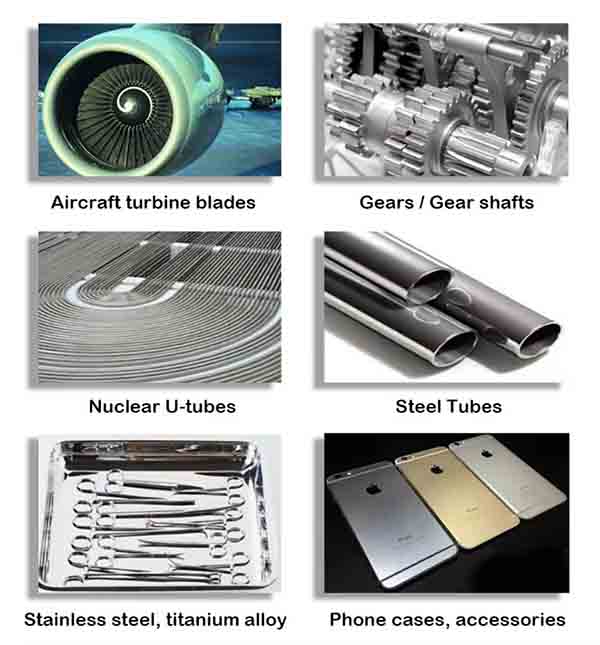
Furthermore, ceramic beads offer remarkable versatility in achieving specific surface effects. Their spherical shape and range of available sizes allow for a highly controlled finish. Smaller beads can produce smooth, polished surfaces with minimal dimensional change, while larger beads can deliver more aggressive cutting or peening action. The peening action, in particular, can induce beneficial compressive stresses on the metal surface, enhancing fatigue resistance—a key requirement for automotive and aerospace components. Unlike angular media, spherical beads are less likely to lodge in holes or cavities, simplifying post-process cleaning.
Finally, ceramic beads are valued for their density and kinetic energy. In processes like shot peening or centrifugal finishing, their substantial mass (especially true for zirconia-based beads) allows them to transfer significant energy upon impact with the metal surface. This ensures efficient descaling, oxidation removal, and surface strengthening without damaging the underlying material, provided the process parameters are correctly set.
In conclusion, ceramic beads represent a synergistic solution for metal surface finishing. Their unparalleled durability ensures economic efficiency, their chemical purity guarantees surface integrity, and their physical characteristics allow for precise, repeatable results across a spectrum of requirements. From delicate deburring to robust surface preparation, ceramic beads provide the reliable, high-performance finish that modern metalworking demands, making them not just suitable, but often the optimal choice for discerning engineers and finishers.